Trying to choose between a condo and a single-family home in Brookline? You are not alone. Both options are in high demand, and each offers a different mix of cost, convenience, space, and long-term value. The right fit comes down to your budget and how you want to live day to day. In this guide, you will compare the essentials and walk away with a decision worksheet and a monthly cost template you can use on any listing. Let’s dive in.
Brookline market snapshot
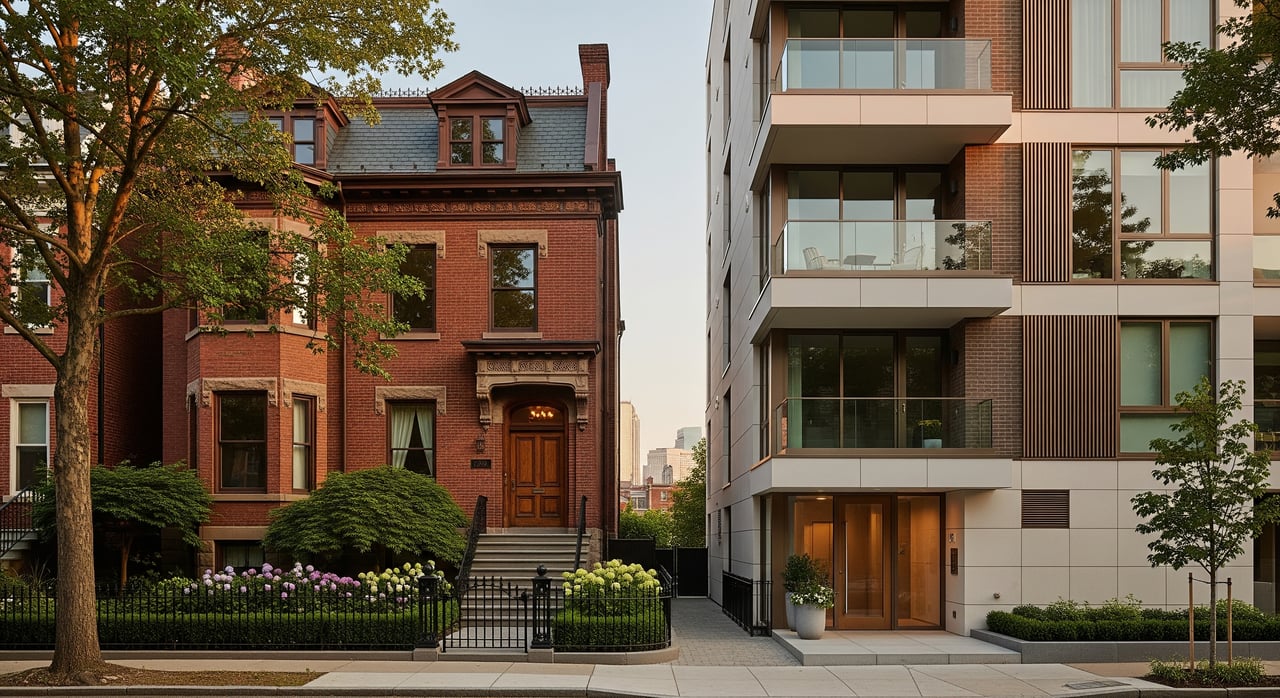
Brookline is a mature, built-out town with walkable village centers like Coolidge Corner, Brookline Village, Washington Square, and Cleveland Circle. Housing ranges from classic brownstone and triple-decker condos near transit to detached single-family homes and larger properties near the Chestnut Hill border and parts of southern Brookline.
Demand is strong for both condos and single-family homes, and inventory can be tight in desirable locations. Proximity to MBTA Green Line stops and Boston job centers plays a major role in pricing and time on market.
Condos often provide a lower entry price than single-family homes because land is at a premium. That said, some buildings command high prices due to location, amenities, or recent renovations. Mortgage rates and monthly fees can influence your total cost more than you expect, so it is smart to compare the full monthly picture for each property.
Cost comparison: what changes and what does not
Upfront purchase considerations
- Purchase price: Single-family homes generally cost more than condos in Brookline because of land value and scarcity. Condos tend to be more budget-friendly at the entry level.
- Closing costs: Similar across both property types. Condo purchases may include association review fees.
- Financing: Lenders look closely at condo association health and fees. Some buildings require higher buyer reserves or specific approvals.
Monthly costs: how to compare apples to apples
- Property taxes: Tax bills are based on assessed value times the municipal tax rate. Single-family homes often have higher assessed values and therefore higher annual taxes in absolute dollars.
- HOA fees vs maintenance reserve: Condos have a monthly HOA fee that usually covers exterior maintenance, building insurance for common areas, snow removal, landscaping, and sometimes heat or hot water. Single-family owners do not pay an HOA, but they should budget for routine maintenance and repairs themselves.
- Insurance: Condo owners usually carry an HO-6 policy for interior coverage, while the association carries a master policy for the structure. Single-family owners carry a full homeowners policy, which is typically higher than an HO-6.
- Utilities: Some condos include heat or hot water in the HOA fee. Single-family homes usually have higher utility costs due to larger spaces and separate systems.
- Capital expenses: In condos, big exterior projects like roof or façade work are handled by the HOA and funded through reserves or special assessments. In single-family homes, you fund all major systems directly.
Parking and storage costs
- Condos: Deeded or garage parking varies by building and location. Many village-center condos do not include a stall, which can lead you to rent a nearby space or use resident street parking. Storage is also more limited on average.
- Single-family: Driveways and garages are more common, providing built-in parking and storage. This reduces ongoing parking expense and boosts convenience.
The monthly cost template you can reuse
Use this checklist to estimate a monthly budget for any listing. Fill in actual numbers from the property details and your lender’s quote.
- Principal and interest: Based on price, down payment, and current rate
- Property tax: Annual tax divided by 12 months
- HOA fee: Condo only, and note what it includes
- Maintenance reserve: Single-family only, set a monthly target based on a rule of thumb
- Insurance: HO-6 for condos or homeowners policy for single-family
- Utilities: Electricity, gas, water, sewer, internet
- Parking: Garage rent, deeded fee if applicable, or permit fee
- Capital reserve: Set aside an amount for larger projects or potential assessments
A common guideline for maintenance is 1 to 3 percent of the property value per year. Older properties or complex systems may push you to the higher end. Treat this as a planning tool and adjust for the specific home.
Lifestyle and space tradeoffs
Condos: convenience and walkability
- Smaller, efficient layouts with limited private storage.
- Low-maintenance living with shared services handled by the HOA.
- Walkable access to shops, dining, and transit in village centers.
- Shared walls and floors mean noise levels vary by building construction.
Single-family: space and privacy
- More interior space, yard access, and storage in basements or attics.
- Greater privacy and control over renovations and exterior decisions.
- More time and budget for upkeep, snow removal, and landscaping.
- Lot sizes vary widely, especially between village-edge streets and southern Brookline.
Parking and transportation realities
Brookline’s parking rules vary by neighborhood, and street parking in village centers can be competitive. If you rely on a car, confirm your parking plan early. For condos, prioritize units with deeded stalls or well-managed resident garages when possible.
Transit is a major value driver. Brookline benefits from MBTA Green Line branches with stops near Coolidge Corner, Brookline Village, Washington Square, and Cleveland Circle, plus bus routes on key corridors. A short walk to transit often commands a price premium and reduces car dependence.
Neighborhood patterns to know
- Coolidge Corner and Brookline Village: Strong condo presence, excellent walkability, and frequent transit. Great if you value convenience over yard size.
- Brookline Hills and Chestnut Hill border: More single-family options with quieter streets and more private outdoor space.
- Washington Square and Cleveland Circle: A mix of condos and single-family homes where block-level differences matter. Always confirm parking, outdoor space, and transit distance for each address.
Use neutral data about schools and attendance zones when comparing locations. Many buyers cite Brookline Public Schools as a reason to choose the town. Check official resources to verify current boundaries and assignment details.
Resale and risk factors
Resale demand
- Single-family: Historically broad buyer pool that values land, privacy, and space. Scarcity can support long-term appreciation.
- Condos: Demand is strongest for well-managed buildings near transit. Smaller or low-amenity buildings can have a narrower buyer pool, while full-service or thoughtfully updated units may command premiums.
HOA health and special assessments
For condos, the HOA’s financial health is critical. Review the budget, reserve study, insurance certificates, recent minutes, and any special assessments or litigation. Weak reserves can lead to surprise assessments that affect affordability and resale.
Inspection and building systems
- Single-family: Inspect roof, foundation, exterior envelope, mechanical systems, and drainage. Older homes may need capital investment.
- Condos: Inspect interior systems and confirm what the HOA is responsible for. Ask about boiler plants, elevators, roofs, and upcoming capital projects.
Financing and use rules
Some lenders have additional requirements for condos, such as minimum owner-occupancy levels, reserve thresholds, or restrictions related to litigation. Also confirm any local and association rules on rentals and short-term use. These factors can affect both financing and future flexibility.
Decision worksheet: score what matters to you
Use this simple matrix to compare a condo and a single-family home. Score each factor from 1 to 5 for how important it is to you, multiply by the weight, and total each column.
| Factor |
Weight |
Condo Score |
Single-Family Score |
| Budget or max purchase price |
5 |
|
|
| Monthly carrying cost tolerance |
4 |
|
|
| Need for private outdoor space |
5 |
|
|
| Desire for low-maintenance living |
4 |
|
|
| Need for off-street or garage parking |
4 |
|
|
| Proximity to transit and walkability |
3 |
|
|
| Privacy and noise sensitivity |
3 |
|
|
| Interest in renting out the property |
2 |
|
|
| School and family needs |
4 |
|
|
| Prefer control of exterior and renovations |
3 |
|
|
Add up each column. The higher total points to the better fit for your lifestyle. Revisit your scores after you tour a few options to see if real-world listings change your priorities.
How to build a short list of listings
Create two saved searches so you can compare options side by side.
- Shared filters for both: Town set to Brookline, target price range, minimum beds and baths, and distance to the nearest Green Line stop in walkable increments such as 0 to 0.5 miles and 0.5 to 1 mile.
- Condo-specific: HOA fee maximum, deeded or garage parking required, balcony or terrace if desired, elevator or no-elevator preference, building age, and any recent building updates.
- Single-family-specific: Driveway or garage required, minimum lot size if a yard is important, recent roof or systems updates, and willingness to consider a renovation opportunity.
For each candidate, note price, square footage, year built, parking details, HOA fee and what it includes, outdoor space, transit distance, and any known assessments or capital projects. This gives you an even comparison across types.
Due diligence checklists for tours
For condos
- Review HOA budget, reserves, master insurance, recent minutes, and any special assessments.
- Confirm parking is deeded, not simply assigned, and note guest parking rules.
- Ask who pays for which utilities and whether heat or hot water is included.
- Ask about soundproofing, elevator reliability, and upcoming capital projects.
- Confirm pet and rental policies and how they affect resale.
For single-family homes
- Ask about roof age, HVAC, plumbing, electrical, and insulation.
- Review basement and foundation for signs of moisture or movement.
- Assess tree maintenance, snow removal logistics, and gutter drainage.
- Understand neighborhood parking rules and any permit needs.
- Get clarity on renovation history and permits for major work.
Who thrives in each option
- Choose a condo if you want low-maintenance living, reliable transit access, and do not need a large yard or workshop storage. You prefer predictable monthly costs and do not mind an HOA.
- Choose a single-family home if you prioritize privacy, outdoor space, and the ability to control your exterior and renovation schedule. You are comfortable handling or hiring for maintenance.
Next steps
You do not have to figure this out alone. The Equinox Group helps you build an apples-to-apples monthly comparison for specific listings, reviews HOA documents, connects you with vetted lenders and inspectors, and curates a short list that fits your lifestyle goals. If you are weighing condo versus single-family living in Brookline, we will help you run the numbers and move with confidence.
Ready to compare real options in Brookline? Schedule a consultation with Paul Reeves today.
FAQs
What are the main cost differences between condos and single-family homes in Brookline?
- Condos often have lower purchase prices but add HOA fees, while single-family homes skip HOA fees but require a maintenance reserve and full homeowners insurance.
How do Brookline parking rules affect condo vs single-family choices?
- Many condos near village centers lack deeded parking, so you may rent or use permits, while single-family homes are more likely to include driveways or garages.
How important is a condo HOA’s financial health when buying in Brookline?
- Very important, because weak reserves can lead to special assessments and can affect financing, monthly costs, and future resale.
Does proximity to MBTA Green Line stops change condo vs single-family value?
- Yes, walkable access to Green Line stops typically increases demand and pricing for both property types and can reduce car dependence.
Which is easier to resell in Brookline, condos or single-family homes?
- Both sell well when well located and well maintained; condos near transit and single-family homes with strong condition and parking tend to attract buyers quickly.