
April 23, 2026
If you are looking at Watertown for your next multi-family investment, you are probably asking two big questions: Will the numbers work, and what do I need to know as a landlord? That is a smart place to start in a market where purchase prices are high, housing stock is older, and rental demand appears durable. This guide will walk you through Watertown’s housing mix, rent and vacancy trends, and the Massachusetts landlord basics that matter most before you buy. Let’s dive in.
Watertown is not a low-cost entry market. According to the U.S. Census Bureau’s QuickFacts for Watertown, the city had an estimated 2024 population of 35,985, a median household income of $126,265, an owner-occupied housing rate of 47.7%, and a median owner-occupied home value of $784,600.
For you as an investor, that points to a community with strong household purchasing power and a meaningful mix of owners and renters. In practical terms, Watertown tends to appeal to buyers who want long-term stability and to renters who are already accustomed to relatively high housing costs.
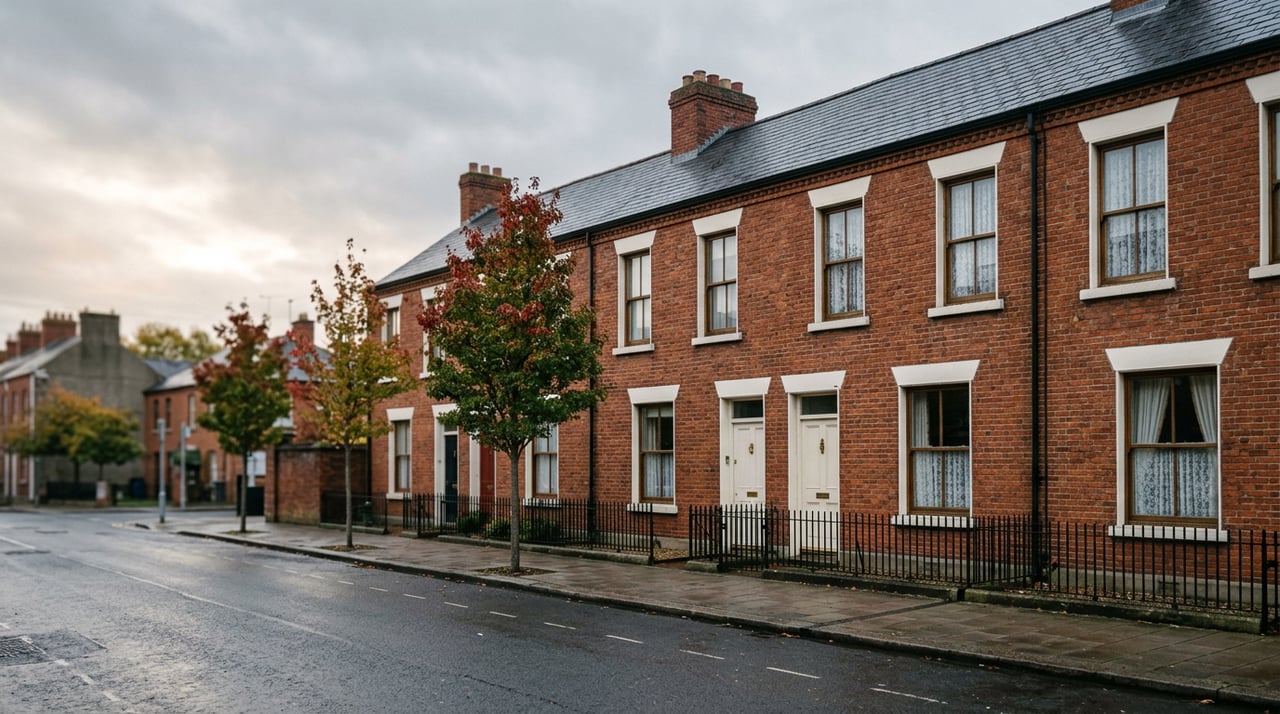
One of the most important facts about Watertown is the type of housing that actually exists there. The city’s 2022 baseline housing assessment found a very mixed housing stock: about 33% single-family homes, 33% two-family homes, 10% three- to four-unit buildings, and 25% five-plus-unit buildings.
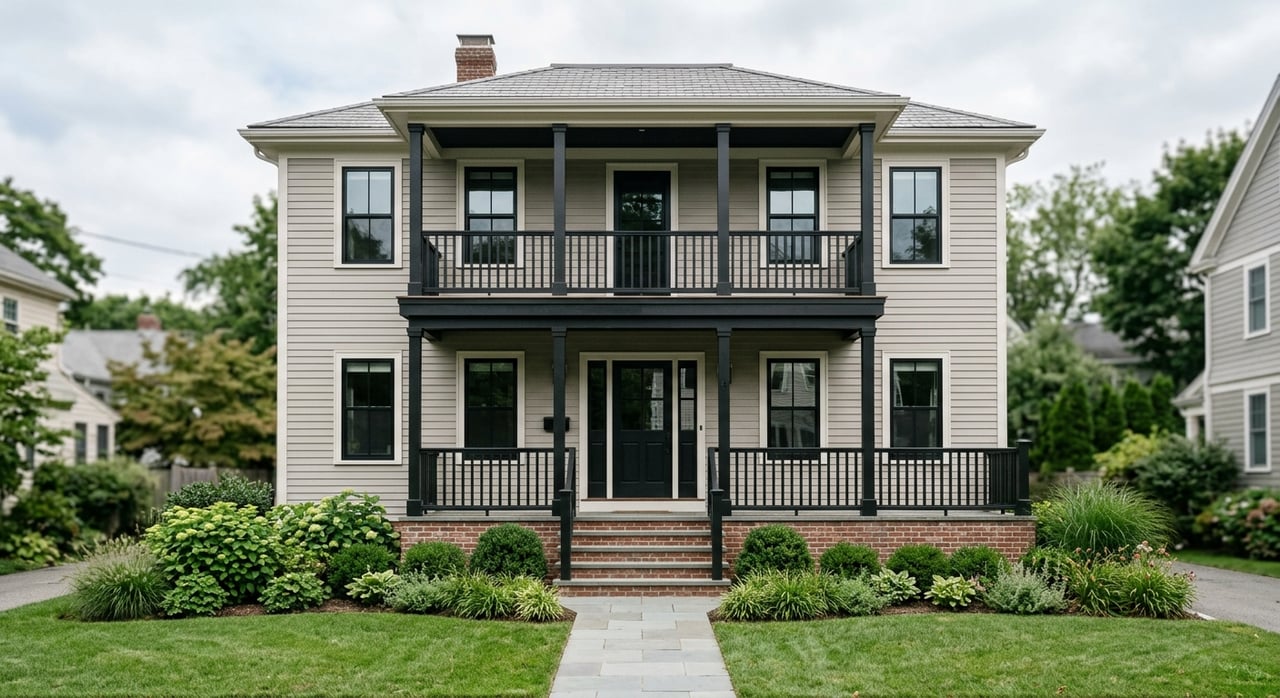
That is useful because it tells you where the real opportunities often sit. In Watertown, the investable inventory is often a two-family, triple-decker, or smaller low-rise multifamily building rather than a large apartment complex.
The age of the housing stock is just as important. The same city assessment found that about 80% of Watertown’s housing was built before 1979, and more than 44% was built before World War II.
For a landlord, older buildings can create opportunity, but they also raise the odds of deferred maintenance, system upgrades, lead-related compliance, accessibility concerns, and energy-efficiency work. If you are buying in Watertown, your inspection and renovation budget matter just as much as your offer price.
Watertown rents remain high by most standards. The Census Bureau reports a 2020-2024 median gross rent of $2,502, while the research snapshots summarized in the market report place more recent asking rents around the high-$2,000s to roughly $3,000.
Because different rent sources use different methods, you should not treat those figures as exact apples-to-apples comparisons. Still, the broad message is clear: Watertown is an expensive rental market, and tenants are already operating in that pricing range.
Rent alone never gives you the full picture. Vacancy helps you understand how easy or difficult it may be to keep units occupied.
According to HUD’s Boston Housing Market Area analysis, the Brookline/Newton/Watertown market area had average rent of $3,261 and a 4.0% apartment vacancy rate in the first quarter of 2024. Later, MassHousing board materials cited in the research report showed the Brookline/Newton/Watertown submarket at 5.3% vacancy year-to-date, with a notable split by property tier.
The same research showed 1-2-star properties averaging $2,631 in asking rent with 1.8% vacancy, 3-star properties averaging $3,388 with 4.7% vacancy, and 4-5-star properties averaging $3,856 with 9.2% vacancy. That suggests a simple but important lesson: higher-end finishes do not always mean faster leasing.
In Watertown, a well-maintained, practical rental unit may have a stronger occupancy profile than a heavily upgraded luxury-style unit chasing top-of-market rents. Simpler workforce-oriented housing appears to face less vacancy pressure than the highest-end product in the broader submarket.
If you are a first-time landlord or a small local investor, that can support a more measured strategy. Instead of over-improving a building, you may be better served by making smart updates that improve condition, function, and durability while keeping the property in a price band with broad renter demand.
Watertown can make sense as a buy-and-hold market, but it usually is not a market where loose underwriting gets rescued by a cheap basis. With home values near $785,000 and rents around $3,000, your returns are likely to depend on disciplined financing, realistic renovation planning, and steady operations.
That means your margin for error can be thin if you underestimate repair costs or assume aggressive rent growth. In a market like this, the investors who usually do best are the ones who understand building condition, reserve planning, and tenant retention.
Watertown is also in a period of housing transition. The city reports that it adopted MBTA Communities-compliant zoning on November 14, 2024, and received a state determination of compliance on April 9, 2025.
That does not mean a sudden wave of new supply will appear overnight. The city’s planning materials and baseline assessment indicate that while single-, two-, and three-family dwellings are allowed by right in some residential districts, larger multifamily projects often involve special permits or site plan review.
For you, the practical takeaway is that future supply growth may be gradual and location-specific rather than immediate and widespread. That can support long-term demand for existing well-located properties, while still creating more competition over time in areas where zoning opens additional by-right capacity.
Buying the property is only one part of the job. If you plan to operate a rental in Watertown, you also need to understand the basics of Massachusetts landlord compliance.
In Watertown, the local Health Department states that it enforces the Massachusetts State Sanitary Code and conducts inspections based on complaints. The city also notes that it can re-inspect after a correction deadline, which means habitability issues can quickly become a code-enforcement matter rather than a private disagreement between landlord and tenant. You can review the city’s housing and sanitary code information.
At a minimum, you should expect your property to be safe, clean, and compliant. For older multifamily buildings, that means paying close attention to leaks, heat, ventilation, pests, and any maintenance issue that could affect livability.
Massachusetts has strict security deposit rules, and small landlords need to take them seriously from day one. According to the state’s security deposit guidance, you can collect no more than one month’s rent for a security deposit.
The deposit must be held in a separate, interest-bearing Massachusetts bank account, and you must provide the required receipt and bank information. The state also requires a statement of condition when the deposit is taken, and a security deposit is not automatically the same as last month’s rent.
This is one of the biggest practical issues in Watertown because so much of the housing stock predates 1978. Massachusetts requires lead law notification for homes built before 1978, and lead hazards must be removed or controlled when a child under 6 lives in a pre-1978 home.
If you are buying an older two-family or three-family property, you should budget time and money to understand the lead status early. Waiting until after closing to investigate can create avoidable cost and compliance pressure.
Safety equipment is another area where landlords need to stay current. Massachusetts requires working smoke alarms and carbon monoxide alarms, and for rental housing, carbon monoxide alarms must be installed and maintained in dwelling units that contain a source of carbon monoxide.
This sounds simple, but it is an area where older homes can get complicated quickly. If you are purchasing a building with older systems or recent renovations, make alarm compliance part of your pre-closing diligence.
If a tenancy goes bad, Massachusetts does not allow self-help eviction. Landlords must use a notice to quit and then follow the court-based summary process.
That matters because your lease paperwork, payment records, and communication history can all become important if a dispute escalates. Good documentation is not just a best practice. It is a core part of responsible property operations.
Massachusetts fair housing law covers a wide range of protected characteristics, including race, color, national origin, religion, sex, familial status, disability, source of income, sexual orientation, gender identity, age, marital status, veteran status, and genetic information. The state’s fair housing overview is worth reviewing before you list a unit or screen applicants.
For landlords, this affects how you advertise, communicate, evaluate applications, and document decisions. A consistent screening process and neutral criteria can help reduce risk and keep your operations aligned with the law.
If you are weighing a Watertown multi-family purchase, it may help to think in terms of balance rather than extremes. The local stock suggests opportunity in older small multifamily properties, while the rent and vacancy data suggest demand for well-kept units that are updated but not overbuilt.
That can make a classic two-family, triple-decker, or modest small multifamily building attractive if the layout, location, and building systems support stable operations. In many cases, the goal is not to create the fanciest unit in the submarket. The goal is to own a property that tenants want to rent and that you can manage responsibly over time.
If you want help evaluating a Watertown multi-family opportunity, from market positioning to property-specific considerations, Paul Reeves can help you think through the numbers, the building, and the path to a smoother purchase.
Stay informed with expert commentary, local market updates, and investment insights from our team of experienced professionals.

October 22, 2026
October 15, 2026
October 8, 2026
October 1, 2026
September 24, 2026

September 17, 2026

September 10, 2026

September 3, 2026

August 27, 2026
Partner with Paul and Cholada for a real estate experience defined by expertise, integrity, and a truly global perspective.

THE EQUINOX GROUP
ADDRESS 27 BOYLSTON ST NEWTON, MA 02467